
By Verônica A. Buss Almeida, M.Sc., P.Eng.
When a loss occurs, whether due to fire, water damage, collapse or mechanical failure, the search for the origin and cause begins almost immediately. Was it a manufacturing defect, misuse, normal component wear, or a hidden flaw? Underpinning these hypotheses is a fundamental question: why did the failure occur? At this precise moment, when the answer lies within the material itself, a crucial yet often overlooked player steps in: the materials engineer.
The role of the materials engineer is to trace the problem back to its origin by analyzing the characteristics of the material, its environment and how it has evolved during its use. Attempting to understand a failure without knowledge of the material it is made of is, in a sense, akin to examining a patient with the naked eye alone, without additional tests: one may gain a general impression but risks overlooking a critical detail. Similarly, the materials engineer focuses on the internal structure of materials, how they behave under real conditions and, most importantly, the mechanisms that lead to failure. In practice, the material becomes a silent but essential witness.
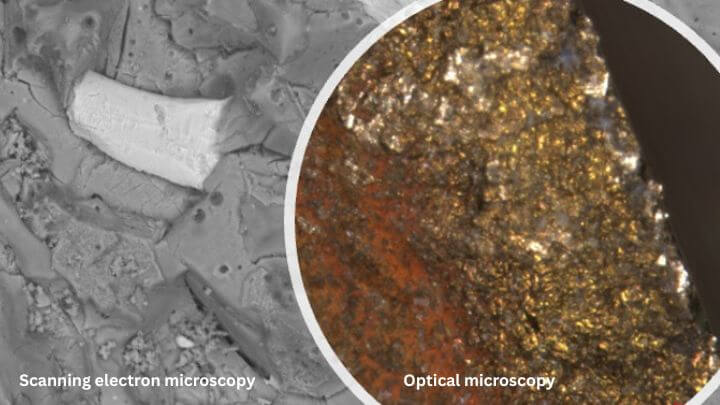
This testimony is interpreted using a rigorous analytical approach that considers the structure of the material (its microstructure or molecular organization), the manufacturing process, its intrinsic properties and its performance during use. Added to these elements is a decisive factor: the environment. Temperature, humidity, chemical agents, and cyclic (repeated) loads can significantly alter failure mechanisms over time. Consequently, two parts that are nominally identical can evolve in drastically different ways depending on how they are used — much like two wines made from the same grape variety but stored under different conditions.
Modern loss investigations also involve a wide variety of materials, including metals, polymers, ceramics and increasingly, composites that combine multiple families. These “hybrid” materials, such as fiberglass composites or metal matrix composites (MMCs – commonly used in the manufacture of drilling tools), optimize properties such as strength, lightness and durability. However, they also introduce more complex and sometimes less intuitive failure modes. In other words, the more sophisticated the composition, the more unexpected the outcome may be.
In this context, the materials engineer acts as a scientific investigator. Based on clues such as cracks, fatigue striations, oxidation, delamination or thermal degradation, the engineer can reconstruct the sequence of events that led to the failure. The tools used vary depending on the case, ranging from macroscopic observation to microscopy and physico-chemical analyses.
However, in the context of a loss investigation, the objective is not to exhaust all available techniques, but rather to perform the relevant analyses needed to establish a probable, coherent and defensible cause. In this respect, a good materials engineer is somewhat like an experienced chef, capable of quickly identifying why a sauce has gone wrong, without needing to analyze the entire kitchen.
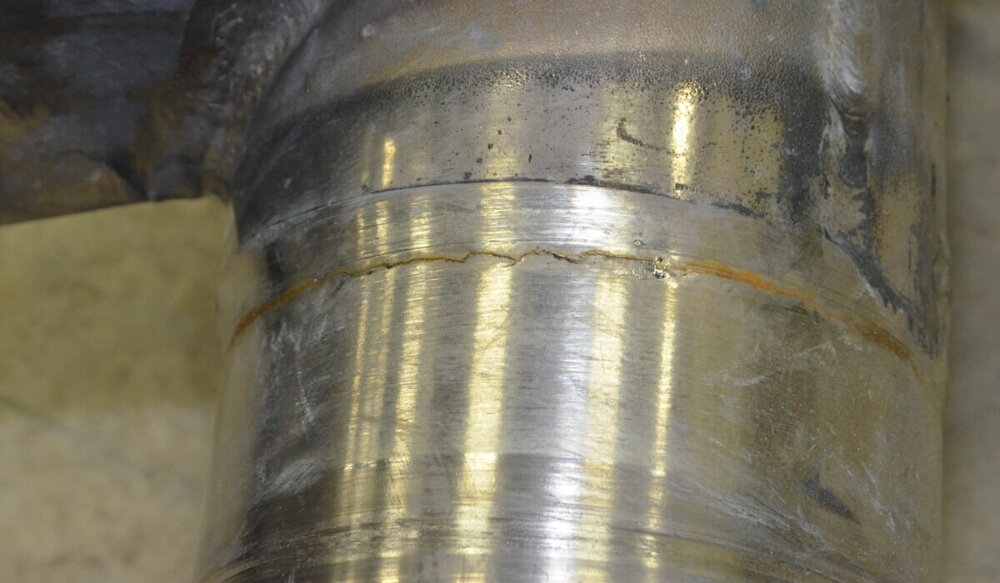
One often overlooked aspect is that not all materials “speak” the same language. Concepts from metallurgy, such as yield strength, grains and recrystallization, do not directly apply to polymers, where reasoning instead involves molecular chains, creep or degradation. Despite these differences, however, certain fundamentals remain universal, particularly the distinction between ductile fracture (with deformation) and brittle fracture (without deformation), which is often central to failure analysis.
This expertise is especially strategic in insurance and litigation. The materials engineer does more than just observe what has failed; they explain why it has failed and under what conditions. Did the failure result from a manufacturing defect? Or from an inappropriate choice of material at the design stage? Or from an unforeseen use or an environment that was not accounted for during the design process? Above all, do the intrinsic material indicators corroborate or contradict the reported version of events? The answers to these questions directly influence the allocation of responsibility, the application of warranties, subrogation claims and the direction of settlement.
Ultimately, in a case involving a loss file, the material often serves as the most reliable evidence. However, one still needs to know how to interpret it. The materials engineer acts as an interpreter, translating technical clues into a coherent, logical and technically defensible narrative. This makes it possible to understand the true origin and cause of the failure.